Which London Fashion Week Designers Make in the UK?
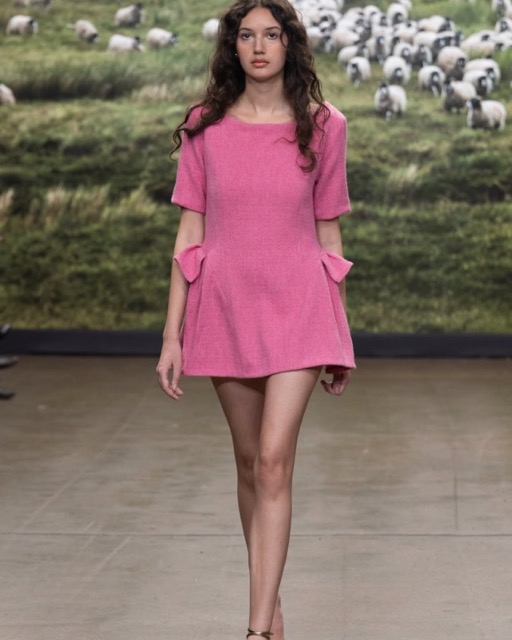
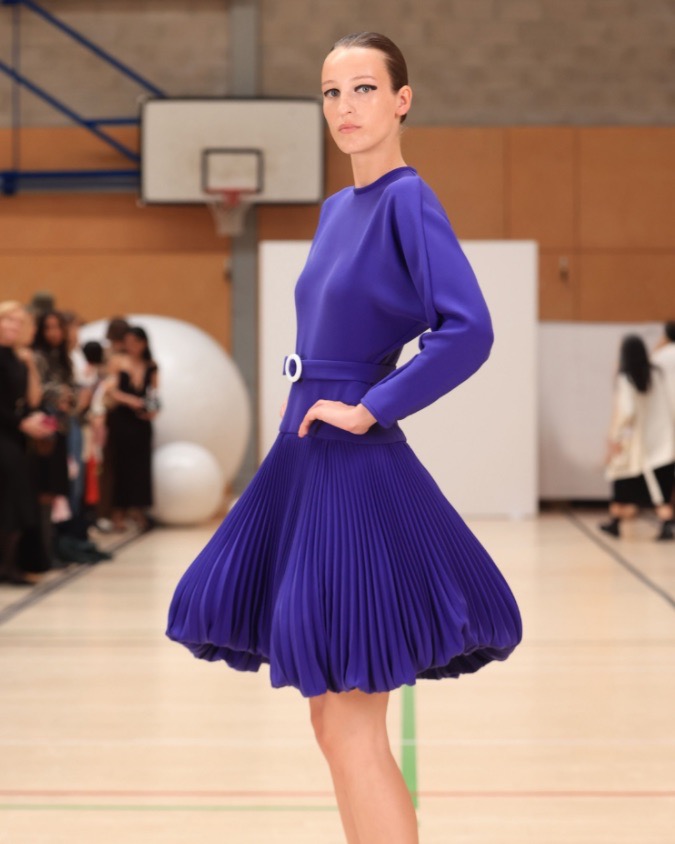
London Fashion Week wrapped up last Monday, and I was absolutely delighted that one of my previous clients, Christine Elizabeth, showed for the first time there.
Her beautiful collection was entirely made in the UK, with wool spun at Z. Hinchliffe & Sons in West Yorkshire, using British Wool, then woven by hand by Christine into the most beautiful cloth in her London studio, then sewn into garments in London.
It got me thinking:
How many of the big names showing at London Fashion Week actually make in the UK?
Sadly most of the big names showing on the main schedule make very little here.
Barbour – make some outerwear here (but not all of their UK-made range is sewn in their South Shields factory like they’d like to have you think).
Burberry – some trenchcoats made in Castleford, Yorkshire with cloth woven in Keighley, Yorkshire, but the majority of the rest is made overseas.
Marks & Spencer – nothing made in the UK as far as I can work out.
Mulberry – say 50% of their bags are made in their 2 factories in Somerset, but the clothes are made overseas.
Alexander McQueen – everything is made in Italy.
Richard Quinn – has a print studio in South London but website does not say where the clothing is made.
Paul Costelloe – uses Irish fabrics but the garments are sewn in Italy.
Emilia Wickstead – website says bespoke and made-to-order services operated from her West London atelier and some of her ready to wear pieces on her website say ‘made in the United Kingdom’ but others say ‘Made in China‘.
Roksanda and Erdem give no information at all about where their clothes are made on their website.
And digging into the websites of many of the others threw up very little info on where they manufacture their clothing. Only Edeline Lee is explicit about the fact that the brand’s collection is ‘made by hand with love and care in England‘ on their website.
What London garment manufacturers have to say…
Rather than keep digging through designer websites, it seemed easier to ask a few London garment manufacturers that I know how much they made for London Fashion Week designers this season, and here’s what they told me…
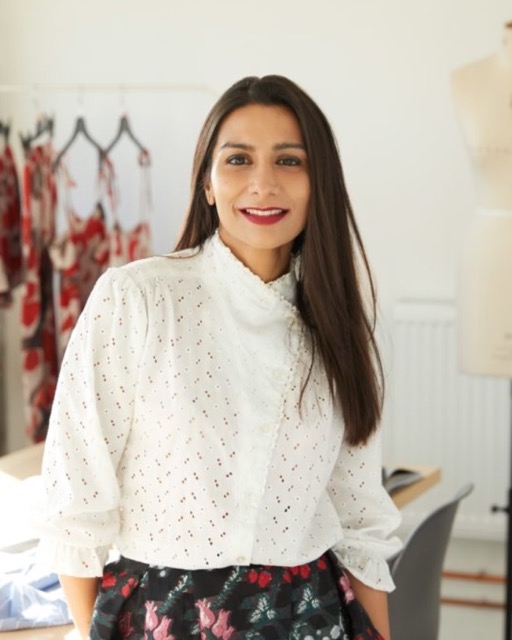
MAES London, an atelier in North London, founded by ex-designer Diana Kakkar and her partner Josh in 2018 to service the luxury fashion market, told me: ‘there’s a genuine shift towards sustainability and local manufacture, particularly among brands with a conscious positioning‘ but admitted that most London Fashion Week designers are ‘still splitting production between UK and overseas to balance price and volume‘.
Diana said that whilst more designers than ever are asking about UK production, costs are a big concern for many. This doesn’t altogether surprise me. Many of the big brands have shareholders wanting to make as much profit as they can, and with the cost of putting on a catwalk show at LFW, the budget gets blown on that, leaving production costs squeezed.
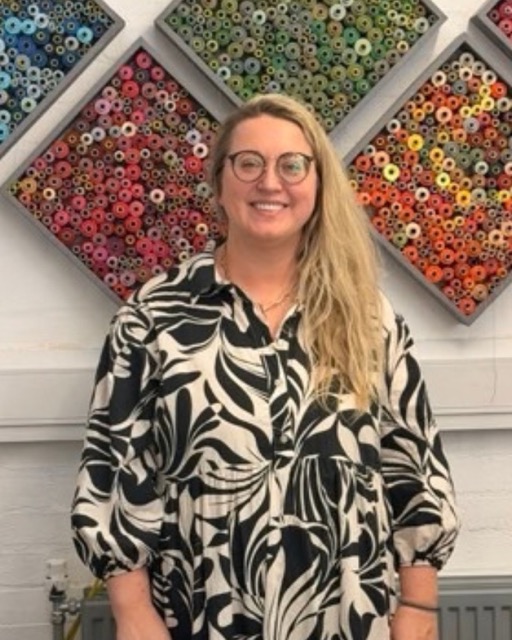
Giedre Zimble, owner of B Fashion Studio in Greenwich, said that she has had an increase in LFW designers that she made for this year, ‘but each year it is different designers that are making more or less, depending if they are doing a runway or are just showcasing somewhere‘.
Giedre also said that some designers left it to the last minute to brief out samples, and she suspected this was because they originally intended to make the garments in a factory in Europe but switched to London at the last minute because they ran out of time.
I can understand her frustration. Manufacturers need consistent business through their factories to stay in business, and don’t want to work with designers that chop and change season after season.
She also vented frustration at the increase in AI-generated tech packs that produced designs for garments with construction details that just didn’t make sense. It’s a problem I see a lot. I’m all for using AI to do a line drawing for a tech pack, but it absolutely has to be checked by someone that knows how to sew a garment together before it is sent off to the factory!
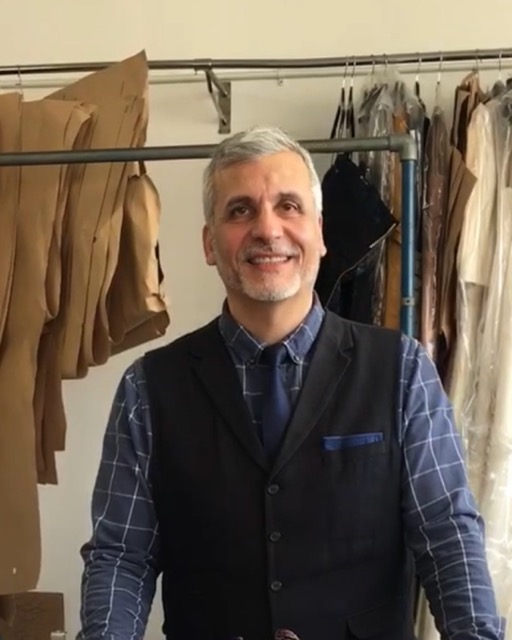
Mustafa Fuat at Gosia London, a high end garment studio in South London, told me he made pieces for three London Fashion Week designers this year. He emphasised the main reason why designers come back to him again and again: ‘We have been producing high-end luxury womenswear and bridalwear in London for over 32 years, using highly skilled machinists and traditional hand-finishing techniques. There is a level of craftsmanship, communication and control that can be difficult to replicate when production is moved elsewhere.‘
Anyone who has tried to explain a fit issue to a factory eight time zones away will know exactly what he means.
Mustafa reiterated what other manufacturers told me about timing: ‘There are still very few highly skilled machinists available, and designers sometimes have to pay significantly above the usual rate to secure machinists who can meet very tight Fashion Week deadlines.‘
So when it comes to all the designers wanting to make samples at the last minute at exactly the same time, those that can plan ahead reap the rewards, whilst those who turn up the week before the show pay for the privilege.
But there is another way…
One other thing that all three manufacturers mentioned was that a growing number of designers are now making everything in-house. This concurs with my own experience of what I’m seeing too. The flexibility of sampling in-house and controlling your own production can overcome many of the problems that can occur when everyone is trying to produce at exactly the same time of the year.
But managing your own production is not for everyone, and being a factory owner as well as a brand owner is not for the faint-hearted – been there myself and come out with the battle scars to prove it!
Is making in London possible for a smaller brand?
If you’re reading this and wondering whether making in London is possible, especially for a smaller brand, I would say – most definitely, YES! Christine Elizabeth is proof that you can craft a fully British product and show at London Fashion Week.
And with good tech packs, careful planning and a committed relationship with your manufacturer, making anywhere in the UK can reap great rewards.
If you’re interested in finding out how I can help you to start or scale your British-made brand apply for my British Brand Accelerator here.